March 2026

Travel

Why Travellers in Singapore Are Flocking to BodyPump Classes

Health-conscious travellers who maintain active fitness routines at home increasingly seek out quality gym experiences when visiting new cities, and Singapore has established itself as one of the most fitness-friendly destinations in Asia for exactly this purpose. Among the fitness experiences that international visitors are discovering and embracing in Singapore, the bodypump class has become a particular favourite for fitness-focused travellers seeking a structured, effective, and immediately accessible strength training experience during their visit.

Why BodyPump Appeals Specifically to Fitness Travellers

Immediate Familiarity for International Visitors

BodyPump is one of the most globally distributed Les Mills programmes, available at licensed gym facilities across more than 100 countries worldwide. For international visitors arriving in Singapore from markets where BodyPump is an established gym offering, attending a bodypump class in Singapore provides immediate programme familiarity that removes the uncertainty of joining an unfamiliar group fitness format in a new country.

The programme structure, exercise vocabulary, and class format are consistent globally, meaning a regular BodyPump participant from the United Kingdom, Australia, or any other major Les Mills market can attend a bodypump class in Singapore and participate confidently from the first track. The Singapore-specific experience comes through the instructor’s personality, the class community energy, and the distinctive character of Singapore’s fitness culture rather than through any unfamiliar programme content.

Maintaining Strength Training During Travel

Business travellers and fitness tourists who include resistance training in their regular fitness routines face a specific challenge when travelling: maintaining strength training continuity without access to their usual gym equipment and programming. The bodypump class solves this challenge by providing a complete full-body barbell resistance training session in a format that is accessible without any prior knowledge of the facility or programme.

A Singapore bodypump class provides visiting strength training enthusiasts with a genuinely complete and appropriately challenging resistance training session within the time constraints of a travel itinerary, maintaining the training continuity that prevents the fitness deconditioning that extended travel without exercise produces.

A Social Fitness Experience Unique to Each City

While the bodypump class programme is globally consistent, the experience of attending a class in Singapore carries the distinctive character of the local fitness community. Singapore BodyPump instructors bring the energy, cueing style, and class personality that reflect local fitness culture, and the class participants represent the diversity and health-consciousness that characterise Singapore’s gym community.

For fitness travellers who view gym attendance as a cultural as well as physical experience, a bodypump class in Singapore provides genuine insight into how Singapore residents engage with fitness, creating a fitness travel memory that extends beyond the workout itself.

Practical Guide for Visiting BodyPump Participants

Accessing BodyPump Classes as a Visitor

Visiting fitness enthusiasts can access bodypump class sessions in Singapore through several practical arrangements:

  • Day pass arrangements at commercial gym operators that include full group fitness class access
  • Short-term trial memberships providing multi-class access for visits of five days or more
  • Introductory member arrangements specifically designed for new Singapore residents or extended business visitors

Most Singapore commercial gyms with Les Mills programmes offer visitor access arrangements that make joining a bodypump class during a Singapore stay straightforward and financially sensible.

What to Expect as a Visiting Participant

The practical experience of attending a bodypump class in Singapore as a visitor is smooth and welcoming. English-language instruction, internationally consistent programme content, and Singapore’s inclusive fitness culture ensure that visiting participants feel comfortable and supported from their first session.

Arriving five to ten minutes before class allows time to collect and set up equipment appropriately, introduce yourself to the instructor as a visiting participant, and settle into the studio environment before the class begins.

For visiting fitness enthusiasts looking for a bodypump class experience in a professional, welcoming gym environment with multiple conveniently located outlets across Singapore, True Fitness Singapore provides accessible visitor arrangements and a Les Mills class programme that delivers the full quality of Singapore’s fitness community to every participant who walks through its doors.

read more
Travel

What Is a Buffalo Leather Duffle Bag and Why Is Buffalo Hide the Toughest Material for Travel Bags?

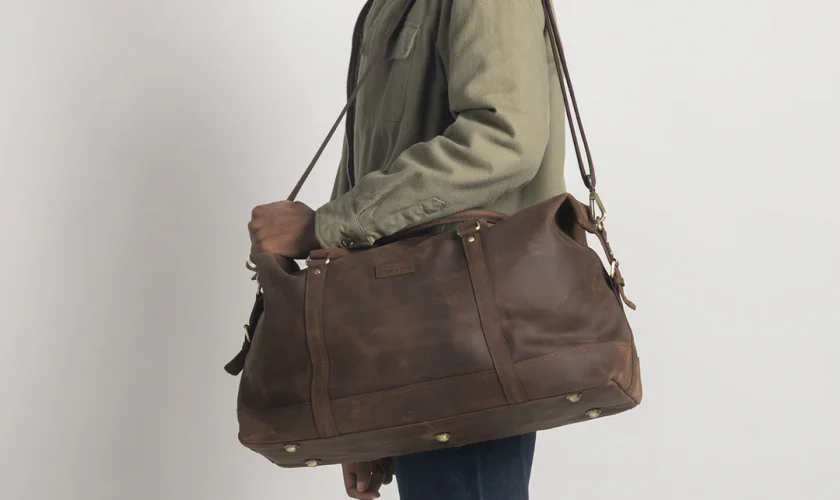
A buffalo leather duffle bag is a travel bag made from full-grain water buffalo hide — a leather that is naturally 20 to 40 percent thicker than cowhide, with a more pronounced grain texture, greater tensile strength, and superior abrasion resistance — making it the most physically durable material available for a travel bag that needs to survive airport conveyor belts, car boot friction, overhead bin compression, and decades of regular travel without structural compromise.

Buffalo leather occupies the premium tier of the leather duffle market because the material is objectively tougher than alternatives. Where cowhide full-grain is excellent, buffalo full-grain is exceptional. The fibre structure is denser, the natural grain is deeper and more visually dramatic, and the hide thickness provides a physical toughness margin that no other commercial leather matches. For travellers who want a rugged buffalo hide duffle that handles the worst travel conditions without showing damage, buffalo leather is the material answer.

This guide covers what makes buffalo leather structurally superior to cowhide for travel bags, how the heavier material affects carry comfort and airline compliance, the dramatic patina development unique to buffalo hide, and how to choose a heavy duty leather travel bag that justifies the premium investment through decades of performance.

Rustic Town’s Rugged Leather Duffle at $199.45 uses full-grain buffalo leather — browse the complete buffalo leather duffle bag collection.

What Makes Buffalo Leather Different from Cowhide for Travel Bags?

Property Buffalo Leather Cowhide Leather
Hide thickness 1.4–2.0 mm (naturally thicker) 0.9–1.4 mm
Tensile strength 25–30% stronger fibre network Standard benchmark
Grain texture Deep, pronounced, dramatic Smoother, finer, more uniform
Abrasion resistance Excellent — survives conveyor belt friction Good — shows contact marks sooner
Water resistance Superior — denser fibre blocks moisture Good — standard full-grain performance
Weight per sq ft Heavier — 20–40% more material Standard
Patina development Dramatic, rustic, deeply textured Elegant, warm, smoother transition
Price 10–25% premium over cowhide Standard benchmark

The thickness advantage is the single most impactful difference for travel bags. A buffalo leather panel at 1.6mm absorbs impact from hard objects, conveyor belt edges, and compression forces that would dent or mark a 1.0mm cowhide panel. For a bag that encounters these forces on every single trip, the extra material thickness is not luxury — it is functional insurance against the physical realities of transit.

How Does Buffalo Leather Develop Patina Differently?

Buffalo leather’s deeper grain creates a more dramatic patina story than cowhide. Where cowhide develops smooth, warm tonal deepening, buffalo develops a textured, rugged character with visible grain ridges that darken at the peaks while valleys retain lighter tones. The result is a three-dimensional patina effect that creates visual depth and surface interest beyond what smooth-grain leather can produce.

The patina timeline is slightly slower than cowhide because the thicker material absorbs oils and light more gradually. A buffalo duffle at year 1 shows subtle darkening at handles and contact points. By year 3, the grain contrast becomes pronounced — rich, dark handle zones against lighter panels with the dramatic texture that makes buffalo leather instantly recognisable. By year 5, the bag has a rugged, well-travelled character that communicates decades of adventures even if it has only seen five years of actual use.

This rugged patina aesthetic pairs naturally with travel. A buffalo leather duffle that has been through 50 trips looks like it belongs in a documentary about world travel — characterful, proven, and visually interesting in a way that no new or synthetic bag can achieve regardless of design quality.

Explore the complete Rustic Town rugged buffalo hide duffle range — the toughest leather available for travel.

Is Buffalo Leather Too Heavy for Travel?

The weight question is the most common concern with buffalo leather travel bags. A buffalo leather duffle weighs approximately 20 to 40 percent more than an equivalent cowhide duffle — typically 2.0 to 2.8 kg empty versus 1.5 to 2.0 kg for cowhide. That is a 500 to 800 gram difference.

In practical terms, this difference is less significant than it appears. A packed travel duffle weighs 8 to 12 kg loaded. The 500g difference between buffalo and cowhide construction is 4 to 6 percent of the total carry weight — functionally undetectable on the shoulder during actual use. You cannot feel the difference between an 8.5 kg and a 9.0 kg bag on a shoulder strap.

Where the weight does matter is airline carry-on weight limits. Some international carriers impose 7 to 10 kg carry-on weight limits. A 2.5 kg empty buffalo duffle leaves 4.5 to 7.5 kg for contents under these limits, compared to 5.0 to 8.0 kg with a cowhide bag. If you fly weight-restricted carriers frequently, the lighter cowhide may be more practical. For US domestic flights where carry-on weight is rarely enforced, the buffalo weight penalty is irrelevant.

What Features Should a Buffalo Leather Duffle Bag Have?

Reinforced stitching at all stress points.

Buffalo leather’s thickness requires heavier-gauge thread and deeper stitch penetration than cowhide. The stitching must match the material’s strength — light stitching on heavy leather creates a weak-link failure point where the thread breaks before the leather does.

Wide padded shoulder strap.

The heavier empty weight of buffalo leather means the shoulder strap must be wider and better padded than on lighter bags. A 5cm+ padded strap distributes the combined weight of bag and contents without creating shoulder pressure points.

Brass hardware sized for the material weight.

D-rings, buckles, and zipper sliders must be proportioned to the heavier material. Standard lightweight hardware that works on cowhide bags is undersized for buffalo leather’s weight and can bend or fail under the combined stress of material weight and packed contents.

Protective base feet.

The heavier bag creates more ground impact when set down. Brass or metal feet protect the buffalo leather base from floor moisture and abrasion that the bag’s own weight drives into the surface with greater force than a lighter bag.

How Do You Care for a Buffalo Leather Duffle Bag?

Buffalo leather requires slightly less frequent conditioning than cowhide because its thicker hide retains internal moisture longer. Condition every 4 to 6 months with a quality leather balm designed for heavy-weight leather. Apply generously — the thicker material absorbs more product per application than thinner cowhide.

Clean after every trip with a damp cloth to remove transit residue, conveyor belt dust, and surface grime. Buffalo’s pronounced grain texture traps dust in the valleys between grain ridges — a slightly damp cloth worked into the grain cleans these recesses without damaging the surface.

Store stuffed with tissue or a rolled towel to maintain the bag’s intended shape. Buffalo leather’s thickness gives it strong shape memory, but prolonged storage without internal support can create panel creases that are harder to remove from thick leather than from thinner cowhide.

Frequently Asked Questions: Buffalo Leather Duffle Bags

Q: What is a buffalo leather duffle bag?

A: A travel bag made from full-grain water buffalo hide — 20 to 40% thicker than cowhide with greater tensile strength, deeper grain texture, and superior abrasion resistance. The toughest leather available for travel bag construction.

Q: How long does a buffalo leather duffle last?

A: 25 to 35+ years. Buffalo hide’s thickness and fibre density exceed cowhide’s already excellent durability. Many buffalo leather bags remain in service after 30 years of regular travel.

Q: Is buffalo leather heavier than regular leather?

A: Yes — 20 to 40% heavier empty. However, the weight difference is 4 to 6% of total carry weight when packed, making it functionally undetectable during actual use.

Q: Is buffalo leather worth the premium price?

A: For travellers who prioritise maximum durability and dramatic patina character, absolutely. The 10 to 25% price premium buys 50 to 75% more material thickness and significantly longer lifespan.

Q: What is the best buffalo leather duffle bag?

A: The Rustic Town Rugged Leather Duffle at $199.45 — full-grain buffalo leather, brass hardware, padded shoulder strap, and reinforced construction throughout.

Shop the complete Rustic Town heavy duty leather travel bag collection — buffalo leather duffles built for decades of demanding travel.

read more
Accommodation

Why Choosing the Right Accommodation Matters for Solo Travelers

Solo travel offers unparalleled freedom. You wake up on your own schedule, alter itineraries on an impulse, and navigate unfamiliar streets entirely on your own terms. Yet, this complete autonomy comes with a trade-off: every logistical responsibility rests squarely on your shoulders. Among all the decisions a solo adventurer must make before departing, selecting where to sleep each night carries the greatest consequence.
Accommodation serves as far more than a physical space to drop luggage and rest your head. For an individual navigating the world alone, lodging functions as a sanctuary, an operational headquarters, a personal security blanket, and an avenue for social connection. A poor choice can lead to isolation, physical exhaustion, budget strain, or genuine danger. Conversely, the right selection transforms a decent trip into a transformative adventure.

The Foundation of Personal Safety and Peace of Mind

When traveling with a partner or a group, there is built-in situational awareness. One person watches the bags while another buys train tickets; one navigates while the other scans the surroundings. Solo travelers lack this backup system, making personal security their top priority.
Accommodation represents the single environment where a solo traveler lets down their guard, falls asleep, and recharges. If that environment feels unsafe, chronic hypervigilance sets in, quickly causing emotional and physical burnout.
  • Neighborhood dynamics after dark: A hotel may appear modern, clean, and reasonably priced online, but its immediate surroundings dictate your mobility. If walking back from dinner requires navigating poorly lit alleyways, deserted industrial zones, or areas known for street harassment, your evening freedom evaporates.
  • Property access controls: Secure lodging options prioritize physical entry protocols. Look for round-the-clock staffed reception desks, electronic keycard access required for exterior doors and elevators, sturdy interior door deadbolts, and in-room safes for passports and electronics.
  • Local emergency support: Knowledgeable staff members can provide invaluable safety insights that guidebooks miss. They can clearly explain which taxi companies are legitimate, which streets to avoid after sunset, and what transit lines remain safe late at night.
Prioritizing safety does not necessarily require five-star luxury pricing. Many budget hostels and boutique guesthouses maintain exceptional security standards. The goal is choosing lodging that allows you to sleep soundly without keeping one ear open.

Managing the Balance Between Solitude and Connection

One of the great paradoxes of solo travel is the tension between craving independence and longing for human connection. While spending days immersed in your own thoughts can be refreshing, chronic loneliness can derail an entire journey. Your choice of lodging dictates the ease with which you bridge this gap.
Different accommodation styles cultivate vastly different social environments:
  • Social hostels: Designed specifically for communal living, hostels offer shared kitchens, organized walking tours, rooftop lounges, and communal dinners. They remain the simplest mechanism for meeting fellow independent travelers from across the globe.
  • Boutique hotels and private guesthouses: These properties strike a balance for travelers who want quiet privacy at night but still appreciate personal recommendations from property owners over breakfast.
  • Traditional business hotels: While comfortable and efficient, large chain hotels tend to insulate guests from one another, creating an anonymous atmosphere that can amplify feelings of isolation during an extended solo trip.
  • Vacation rentals: Renting an entire apartment provides supreme independence, but it can isolate a solo traveler entirely from local communities unless deliberate efforts are made to interact outside.
Understanding your social threshold before booking prevents travel fatigue. An introverted traveler may quickly tire in a lively party hostel, while an extroverted traveler might feel trapped in an isolated suburban apartment.

Geographic Efficiency and Daily Logistics

Location determines your most valuable travel resource: time. While reserving a room on the outskirts of a major metropolis might save money on the nightly rate, it frequently proves counterproductive once real-world logistics come into play.
A centrally located property or one situated immediately adjacent to a major transit hub fundamentally alters the day-to-day rhythm of solo exploration.
  • Midday access: When your room is within walking distance of central attractions, you can drop off shopping bags, use a private restroom, change clothing for fluctuating weather, or take a short afternoon rest without losing hours of your day.
  • Transit cost offsets: Staying in distant suburbs requires multiple train transfers, commuter rail passes, or expensive late-night ride-shares when public transit stops running. These daily transit costs routinely exceed the nightly savings of the cheaper suburban room.
  • Spontaneous exploration: Proximity to cultural centers, restaurants, and pedestrian zones allows you to step directly out the front door and start exploring immediately, eliminating the friction of long daily commutes.
Before booking, calculate the transit time between the property and the specific attractions you plan to visit. A slightly higher nightly rate in a walkable district frequently delivers superior value when considering transit savings and conserved energy.

Health, Rest, and Recovery

Solo travel demands steady physical and mental effort. You are constantly translating signs, navigating foreign public transit networks, deciphering menus, and processing new sensory input. Without a travel companion to share the decision-making load, sensory overload can arrive swiftly.
Quality sleep serves as the primary defense against travel fatigue, decision paralysis, and illness on the road. Substandard lodging compromises that recovery.
  • Acoustic insulation: Thin walls, windows facing busy arterial roadways, or rooms positioned directly above nightclub venues prevent restorative sleep.
  • Climate control: Reliable air conditioning in tropical climates and proper heating during cold winters are essential for physical comfort and preventing respiratory illness.
  • Bedding and ergonomics: A supportive mattress, clean linens, and a comfortable setup allow your body to recover from walking ten to twenty thousand steps a day across cobblestones and urban pavements.
Investing in a lodging environment that guarantees quiet, clean, and restful downtime protects the longevity of your entire itinerary.

Budget Allocation and Hidden Values

Accommodation typically absorbs the largest portion of any travel budget. For solo travelers, the financial equation carries unique challenges, notably the absence of someone to split the room bill. Many hotels price rooms on double occupancy, effectively imposing a single supplement on lone adventurers.
To maximize your travel funds, evaluate accommodation through a lens of total daily value rather than just the listed room rate:
  • Complimentary breakfasts: Quality on-site morning meals provide substantial fuel for active days and eliminate the cost and effort of finding a cafe every morning.
  • Self-catering amenities: Access to a shared or private kitchenette allows you to prepare simple meals, chill drinking water, and store fresh market produce, reducing expensive restaurant spending.
  • Complimentary laundry access: Facilities to wash clothes on-site allow you to pack lighter, bypass airline checked-bag fees, and travel with greater physical agility.
  • Free luggage storage: Properties that hold bags securely before check-in or after check-out save you the expense and hassle of finding train station lockers.
Evaluating these embedded amenities reveals whether an inexpensive listing is truly a bargain or if a slightly higher-priced alternative actually saves you cash.

Frequently Asked Questions

What should a solo traveler check in recent reviews before finalizing a reservation?

Look for specific feedback written by other individual travelers rather than families or couples. Filter reviews using terms like solo, walkability, nighttime, noise, and neighborhood. Pay close attention to comments mentioning entrance lighting, the responsiveness of the front desk team, Wi-Fi stability, and whether the room photos match modern reality.

How does a traveler confirm whether a property has an active social scene without booking a party hostel?

Examine the amenities list for communal spaces such as shared dining areas, on-site cafes, game rooms, or garden terraces. Check whether the property organizes low-key activities like group walking tours, language exchanges, or family-style dinners. Read guest commentary to see if reviews frequently mention meeting other travelers in common areas.

Is staying in a shared dormitory advisable for a first-time solo traveler?

Shared dormitories can be an excellent introduction to solo travel if you choose properties that cater to rest rather than late-night revelry. Look for dorm rooms that provide privacy curtains on every bed, individual reading lamps, personal electrical outlets, and lockers large enough to fit an entire backpack or suitcase.

What strategies can a solo traveler use to avoid paying the single supplement at conventional hotels?

Seek out independent boutique hotels, historic inns, or European-style guesthouses that feature dedicated single rooms. These rooms have smaller footprints and single beds, with rates discounted specifically for lone occupants. Alternatively, look for modern micro-hotels and pod-style properties designed specifically around efficient individual occupancy.

How can a solo traveler verify the true safety of an unfamiliar neighborhood before arriving?

Use online street-level satellite maps to examine the physical condition of the block, looking for open storefronts, well-maintained sidewalks, and street lighting. Reach out to local community forums online or message the property directly to ask about safe pedestrian corridors between the nearest transit station and the hotel entrance.

What should a solo traveler do if their booked accommodation feels unsafe upon arrival?

Never force yourself to stay in an environment that triggers your intuition or compromises your personal security. Keep your primary luggage packed, remain in a public area such as the lobby, and use your smartphone to book an alternative room in a reputable, centrally located hotel. The monetary loss of a canceled reservation is minor compared to your peace of mind and physical safety.

Why is check-in flexibility particularly critical when traveling alone?

Solo travelers have no companion to wait with luggage at a curbside cafe if transit delays disrupt an arrival schedule. Properties featuring twenty-four-hour staffed reception or automated keypad entry prevent travelers from being stranded outside late at night due to delayed flights, canceled trains, or unexpected transit detours.
read more