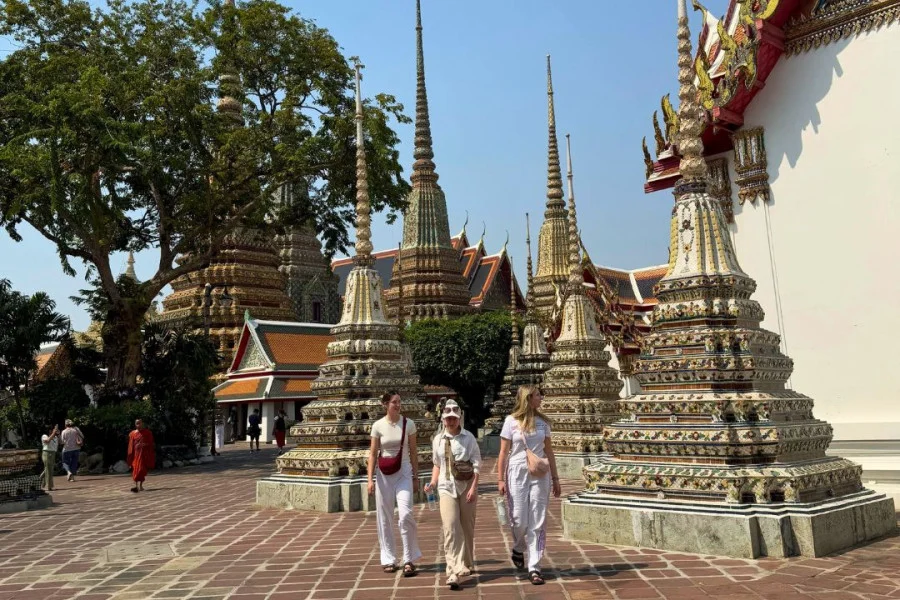
A woman stood at the edge of a viewpoint holding her phone in both hands, framing the same shot everyone else was taking. She stepped forward, adjusted the angle, captured the image, then immediately stepped back into the flow of people moving on. The moment lasted less than thirty seconds. It raised a quiet question about what it actually means to experience a place rather than record it, especially when visiting a tourist attraction in Thailand where thousands of similar moments repeat every day.
Photographs flatten experience. They preserve shape and colour but discard temperature, sound, scale, and emotional tone. Standing somewhere in person carries weight in the body, the warmth of stone underfoot, the wind shifting unexpectedly, the echo of voices bouncing through open space. These sensations build memory far more deeply than pixels ever can.
People rarely remember the precise framing of an image years later. What returns instead is how the air felt, how crowded or quiet the space seemed, whether there was time to linger or only to pass through. Memory anchors itself to atmosphere rather than appearance.
How Physical Sensation Anchors Memory
Even brief pauses alter perception. Sitting rather than standing changes perspective. Watching how others move through the space reveals patterns of behaviour, where people hesitate, where they rush, where they smile or grow impatient. These small observations turn static scenery into living context.
Crowd dynamics shape emotional response as much as architecture or landscape. A landmark encountered at dawn feels entirely different from the same place at midday. Silence invites reflection, while noise creates energy or irritation depending on temperament.

Physical engagement deepens recall. Walking uneven paths, climbing steps, adjusting posture against wind or heat forces the body into participation rather than passive observation. This involvement embeds memory through sensation rather than imagery alone.
Why Constant Documentation Dilutes Experience
The urge to capture moments often comes from fear of forgetting or from social pressure to demonstrate experience publicly. Ironically, constant recording fragments attention. When the mind focuses on framing rather than sensing, experience becomes mediated rather than direct.
Attention narrows. Awareness shifts outward rather than inward. The body remains present, but the mind becomes occupied with representation rather than participation.
This habit trains memory to rely on external storage rather than internal experience. Over time, people remember what they recorded rather than what they felt.
Letting Places Register on Their Own Terms
Presence invites slowness. Slowness reveals detail. Detail creates meaning. A shadow shifting across stone, a distant sound carried by air, a temperature change as clouds pass overhead, these fragments accumulate quietly without needing translation.
Landmarks gain emotional weight not through scale alone but through how they intersect with personal state. Fatigue alters patience. Companionship amplifies warmth. Solitude sharpens observation. The same place registers differently depending on who we are in that moment.
What endures is rarely the perfect image. It is the layered imprint formed when attention fully inhabits a space rather than converting it into content. Long after files disappear, the body remembers how it felt to be there.